
Reducing monthly expenses can create more room in your budget for savings, debt repayment, investing, and other financial goals. The challenge is finding expenses you can realistically reduce without making your everyday life unnecessarily difficult.
You do not need to eliminate everything you enjoy to improve your finances. In many cases, the biggest opportunities come from reviewing recurring expenses, controlling discretionary spending, and making smarter decisions about larger costs.
If you want to lower your monthly expenses, start by understanding where your money goes and then focus on changes that can continue working month after month.
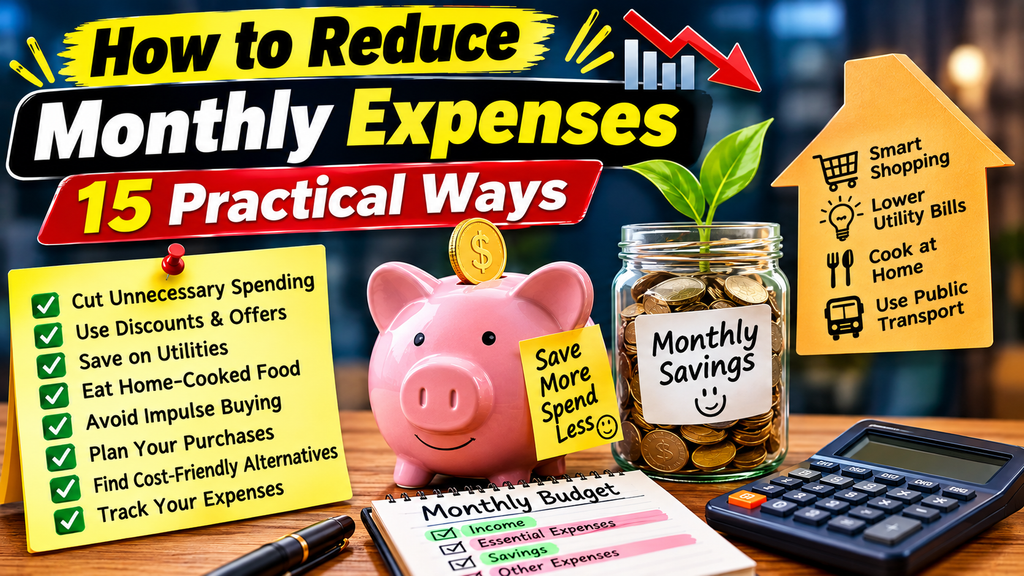
Why Reducing Monthly Expenses Matters
Your monthly expenses determine how much of your income remains available for other financial priorities.
Lower expenses can give you more flexibility to:
- Build an emergency fund
- Pay down debt
- Increase retirement contributions
- Invest for long-term goals
- Save for major purchases
- Handle unexpected expenses
For example, reducing recurring expenses by $100 per month would free up $1,200 over a year, assuming the savings continue.
The key is focusing on sustainable reductions rather than temporary sacrifices.
1. Review Your Bank Statements
Start with your actual financial data.
Review several months of bank and credit card transactions and categorize your spending.
Look for:
- Recurring subscriptions
- Restaurant purchases
- Delivery fees
- Shopping
- Entertainment
- Transportation
- Insurance
- Utilities
- Other recurring charges
You may find expenses you forgot about or services you no longer use.
2. Cancel Unused Subscriptions
Subscriptions can become easy to overlook because individual charges are often small.
Review:
- Streaming services
- Music platforms
- Fitness memberships
- Software
- Apps
- Subscription boxes
- Online memberships
Cancel services you no longer use.
For services you still enjoy, consider whether you need multiple subscriptions at the same time.
3. Reduce Restaurant Spending
Eating out can become a significant monthly expense.
You do not have to stop eating at restaurants entirely.
Instead, establish a reasonable monthly limit.
Cooking at home more frequently and preparing lunches can reduce spending while still allowing occasional restaurant meals.
4. Plan Your Grocery Shopping
A grocery plan can reduce unnecessary purchases.
Before shopping:
- Check your kitchen.
- Plan several meals.
- Make a list.
- Compare prices.
- Avoid buying food you are unlikely to use.
Buying in bulk is not automatically cheaper if food goes unused.
Focus on total value rather than simply choosing the largest package.
5. Lower Your Transportation Costs
Transportation can represent a large portion of a household budget.
Review:
- Car payments
- Fuel
- Insurance
- Parking
- Maintenance
- Registration
- Rideshare spending
Where practical, consider combining errands, using public transportation, carpooling, or reducing unnecessary trips.
If you own a vehicle, maintaining it properly may also help avoid more expensive repairs.
6. Review Insurance Costs
Insurance is an important expense, but it is worth reviewing your policies periodically.
Compare available options and make sure your coverage still matches your needs.
Do not reduce important coverage solely to save money without understanding the potential consequences.
The goal is to find appropriate coverage at a reasonable cost.
7. Reduce Energy Costs
Utility expenses can sometimes be reduced through everyday changes.
Depending on your home, possibilities include:
- Adjusting your thermostat
- Turning off unused lights
- Using energy-efficient appliances
- Improving insulation
- Reducing unnecessary heating or cooling
- Monitoring electricity usage
The potential savings depend on your home and local utility costs.
8. Review Your Phone and Internet Plans
Technology bills can become expensive over time.
Review your current plans and determine whether you are paying for features or data you do not need.
Compare available plans before changing providers.
A lower-cost plan may be sufficient if your current usage is modest.
9. Control Impulse Purchases
Impulse purchases can quietly increase monthly expenses.
Before buying something nonessential, ask:
- Do I need it?
- Did I plan for it?
- Is there a cheaper alternative?
- Would I rather use the money for a financial goal?
For larger purchases, consider waiting several days before deciding.
A waiting period can reduce unnecessary spending.
10. Use a Shopping List
Shopping without a list can make it easier to buy things you did not plan to purchase.
A list gives you a simple boundary.
This can apply to:
- Groceries
- Clothing
- Household goods
- Online shopping
Avoid adding unnecessary items simply because they are discounted.
A discount does not create savings if you would not have purchased the item otherwise.
11. Review Your Housing Costs
Housing is often one of the largest household expenses.
Depending on your circumstances, reducing housing costs could have a significant effect on your budget.
Possible options might include:
- Moving to a less expensive home
- Negotiating certain costs where possible
- Taking on a roommate
- Reducing unnecessary housing-related services
Housing decisions should be considered carefully because moving can involve substantial costs and practical consequences.
12. Reduce Credit Card Interest
If you carry high-interest credit card balances, interest charges can become a major monthly expense.
Review your interest rates and debt balances.
A repayment strategy focused on high-interest debt can reduce the amount of money lost to interest over time.
Do not focus only on the minimum payment.
Understand how long repayment may take and how much interest you could pay.
13. Use a Monthly Spending Limit
Create specific limits for discretionary categories.
For example:
- Restaurants: $150
- Entertainment: $100
- Personal shopping: $100
The actual amounts should fit your income and financial goals.
The purpose is to make discretionary spending intentional rather than unlimited.
14. Replace Expensive Habits With Lower-Cost Alternatives
You can often reduce expenses without eliminating an activity.
For example:
Instead of frequent restaurant meals, cook at home and reserve restaurants for special occasions.
Instead of buying expensive entertainment regularly, use free community events or lower-cost activities.
Instead of constantly upgrading electronics, use existing devices longer when practical.
The goal is to reduce cost while preserving the activity you enjoy.
15. Avoid Lifestyle Inflation
When income increases, it can be tempting to increase spending immediately.
Instead, consider directing part of the increase toward:
- Emergency savings
- Debt repayment
- Retirement
- Investing
- Other financial goals
You can still improve your lifestyle without allowing every raise to become another permanent monthly expense.
Focus on Recurring Savings
When looking for ways to reduce expenses, prioritize recurring costs.
Saving $50 every month can be more valuable over a year than finding a one-time $50 discount.
Look for expenses that can be reduced repeatedly.
Examples include:
- Subscriptions
- Insurance
- Phone plans
- Internet
- Transportation
- Restaurant spending
Recurring savings compound in their impact because they continue month after month.
What Expenses Should You Cut First?
Start with expenses that are:
- Unnecessary
- Recurring
- Relatively expensive
- Easy to reduce
- Unlikely to negatively affect your quality of life
For example, canceling an unused subscription is usually easier than making a major housing change.
Start with simple wins before considering larger changes.
Should You Cut Everything You Enjoy?
No.
A financial plan that eliminates every enjoyable expense may be difficult to maintain.
Instead, create room for reasonable discretionary spending.
The objective is not to spend as little as possible.
It is to make sure your spending aligns with your priorities.
How Much Can You Save by Reducing Expenses?
The amount varies significantly by household.
For example, suppose you reduce:
- Subscriptions by $30
- Restaurant spending by $75
- Shopping by $50
- Transportation by $45
That would create $200 of monthly savings.
Over a year, that would equal $2,400 if maintained consistently.
Your actual savings may be higher or lower.
What Should You Do With the Money You Save?
Do not allow reduced expenses to simply become additional spending elsewhere.
Give the savings a purpose.
You could direct additional money toward:
Emergency Savings
Build a cash reserve for unexpected expenses.
Debt Repayment
Pay down expensive debt.
Retirement
Increase contributions to eligible retirement accounts according to your financial situation.
Long-Term Investing
Allocate appropriate money toward long-term investments after considering your goals, risk tolerance, and time horizon.
Common Mistakes When Cutting Expenses
Cutting Too Aggressively
Extreme reductions can be difficult to maintain.
Ignoring Large Expenses
Small purchases matter, but major recurring costs can have a larger effect.
Cutting Important Financial Protection
Do not blindly eliminate necessary insurance or other important protections.
Saving Money and Then Spending It Elsewhere
Give your savings a specific purpose.
Making Temporary Changes Only
Focus on changes you can maintain over the long term.
A Simple Expense-Reduction Plan
Start with these five steps:
Step 1: Review three months of transactions.
Step 2: Cancel unused subscriptions.
Step 3: Set limits for discretionary spending.
Step 4: Review major recurring expenses.
Step 5: Automatically redirect the savings toward a financial goal.
Repeat the process every few months.
Final Thoughts
Learning how to reduce monthly expenses does not require completely changing your lifestyle.
Start by reviewing your actual spending and identifying recurring expenses that provide limited value.
Cancel unused subscriptions, reduce unnecessary restaurant and shopping spending, review major bills, control impulse purchases, and look for lower-cost alternatives.
Most importantly, direct the money you save toward something meaningful, such as emergency savings, debt repayment, retirement, or long-term investing.
The goal is not simply to spend less.
The goal is to create more financial flexibility and use your money intentionally.