
An emergency fund is one of the most important parts of a strong personal finance plan. It gives you money to use when an unexpected expense or financial setback occurs without immediately relying on credit cards, loans, or other forms of debt.
Building an emergency fund can seem difficult, especially when your income is already committed to housing, food, transportation, bills, and other expenses. However, you do not need to save a large amount overnight.
The most effective approach is to start with a realistic target, save consistently, and gradually increase your financial cushion.
In this guide, you’ll learn how to build an emergency fund from scratch, how much you may want to save, where to keep the money, and how to make saving easier.
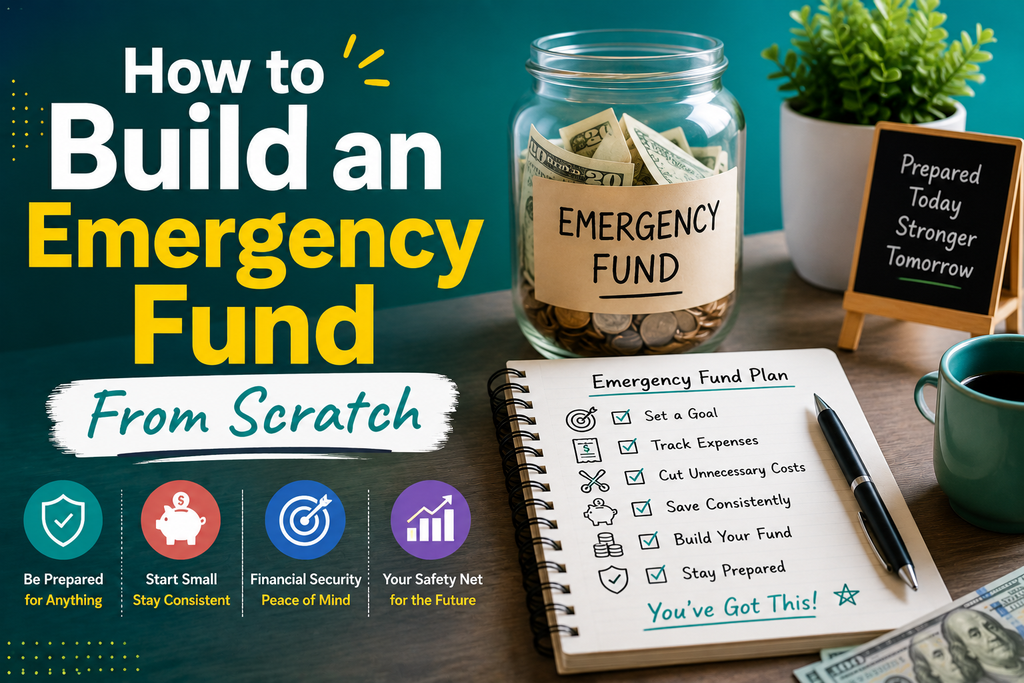
What Is an Emergency Fund?
An emergency fund is money specifically reserved for unexpected and necessary expenses.
It is different from money you save for planned purchases such as a vacation, new phone, holiday gifts, or a new car.
Potential emergencies can include:
- Unexpected car repairs
- Major home repairs
- Sudden essential expenses
- Temporary loss of income
- Unexpected medical or household costs
- Urgent travel expenses
The purpose of an emergency fund is financial stability.
When an unexpected expense occurs, you can use your emergency savings instead of immediately turning to expensive debt.
Why Is an Emergency Fund Important?
Financial emergencies can happen even when everything appears to be going well.
A broken vehicle, unexpected bill, or period without income can disrupt your financial plan.
Without savings, you may have to:
- Use a credit card
- Take out a personal loan
- Borrow from family or friends
- Sell investments at an inconvenient time
- Delay other financial goals
An emergency fund provides another option.
Having accessible savings can give you more flexibility when unexpected expenses occur.
How Much Should You Have in an Emergency Fund?
There is no single emergency fund amount that works for everyone.
Your ideal target depends on factors such as:
- Monthly essential expenses
- Income stability
- Number of people in your household
- Job security
- Debt obligations
- Health and other personal circumstances
- Access to other financial resources
A common long-term goal is to build enough savings to cover several months of essential expenses.
However, that does not mean you need to reach that target immediately.
If you currently have nothing saved, your first goal can simply be establishing a small financial cushion.
Once you reach that initial milestone, continue building toward a larger reserve.
Start With a Small Emergency Fund
One of the biggest mistakes beginners make is believing that emergency savings only count if they reach several months of expenses.
That mindset can discourage people from starting.
Instead, focus on your first achievable milestone.
For example, you could set an initial goal of:
- $250
- $500
- $1,000
The specific amount should fit your financial situation.
A small reserve will not cover every emergency, but it is still better than having no emergency savings at all.
After reaching your first goal, you can gradually increase it.
Step 1: Calculate Your Essential Monthly Expenses
Before deciding how much you need, calculate your essential monthly costs.
Include expenses such as:
- Housing
- Utilities
- Basic groceries
- Transportation
- Insurance
- Required debt payments
- Necessary household expenses
Do not necessarily include every discretionary expense.
The purpose is to determine how much money you would need to maintain essential living costs during a financial disruption.
For example, if your essential monthly expenses are $2,500, a reserve covering several months would be substantially larger than if your essential expenses were $1,500.
Step 2: Set a Specific Savings Goal
A vague goal such as “save more money” is difficult to measure.
Instead, choose a specific target.
For example:
Short-term goal: Build $500.
Next goal: Build $1,000.
Long-term goal: Build several months of essential expenses.
Breaking a large goal into smaller milestones can make the process feel more manageable.
Each milestone also gives you an opportunity to review your budget and increase your savings rate.
Step 3: Create Room in Your Budget
Look at your current spending and determine how much you can realistically save each month.
You may find savings by reducing expenses such as:
- Restaurant spending
- Unused subscriptions
- Impulse purchases
- Frequent delivery orders
- Entertainment expenses
- Unnecessary shopping
You do not have to eliminate everything you enjoy.
The objective is to identify expenses you are comfortable reducing temporarily or permanently.
Even a relatively small monthly contribution can build into meaningful savings over time.
Step 4: Automate Your Savings
One of the easiest ways to build an emergency fund is to automate contributions.
You can schedule a recurring transfer from your checking account to your savings account.
For example, if you receive a paycheck regularly, you could arrange for a predetermined amount to move into savings shortly after your income arrives.
Automation reduces the temptation to spend the money first.
It also turns saving into a routine rather than a decision you need to make every month.
Step 5: Use Extra Money Wisely
Occasional income can provide an opportunity to accelerate your emergency fund.
Depending on your circumstances, extra money might come from:
- A tax refund
- A work bonus
- Overtime
- Freelance income
- Selling unused items
- A temporary side job
You do not necessarily need to put all additional money into savings.
However, directing a portion toward your emergency fund can help you reach your target faster.
Step 6: Keep Emergency Savings Separate
Consider keeping emergency savings separate from the account you use for everyday spending.
A separate account can make it easier to see how much you have reserved for emergencies.
It may also reduce the temptation to spend the money on ordinary purchases.
For many people, an interest-bearing savings account can be a practical place for emergency savings because the money can remain accessible while potentially earning interest.
The right account depends on current rates, fees, access requirements, and your personal circumstances.
Step 7: Keep Emergency Money Accessible
Emergency savings should generally be easy to access when you genuinely need it.
The goal is not to maximize investment returns.
An emergency fund exists primarily for liquidity and financial protection.
For that reason, putting emergency money into volatile investments may expose your emergency reserve to market losses at exactly the time you need the money.
Long-term investment money and emergency savings generally serve different purposes.
Emergency Fund vs. Investing
It is important to understand the difference between emergency savings and investments.
An emergency fund is designed for short-term financial protection.
Investments are generally intended for longer-term financial goals and involve risk.
For example, imagine you have $5,000 available.
If you have no emergency savings and need the money for an unexpected expense soon, investing all of it in stocks may create a problem if the market declines when you need the cash.
A financial plan should consider both liquidity and long-term growth.
What If You Have Credit Card Debt?
This can be a difficult decision.
High-interest credit card debt can be expensive, but having no emergency savings can also leave you vulnerable to taking on additional debt when something unexpected happens.
A practical approach may be to establish a basic emergency cushion while aggressively addressing expensive debt.
Once you have a starter emergency fund, you can evaluate how much additional money should go toward debt repayment versus savings.
The appropriate balance depends on your interest rates, income stability, expenses, and overall financial situation.
What Counts as a Real Emergency?
One of the most important parts of maintaining an emergency fund is knowing when to use it.
A genuine emergency is generally an unexpected, necessary expense that you cannot reasonably cover with your normal monthly cash flow.
Examples may include:
- A major car repair needed for transportation
- An urgent home repair
- An unexpected essential expense
- A significant temporary loss of income
Things that are planned or optional usually should not come out of an emergency fund.
For example, a vacation, new entertainment system, or routine shopping purchase is generally not an emergency.
Creating separate savings categories for planned expenses can help prevent your emergency fund from being used for ordinary purchases.
What If You Need to Use Your Emergency Fund?
Using your emergency savings does not mean you failed.
That is exactly what the fund is designed for.
Suppose you have built a $5,000 emergency reserve and use $2,000 for an unexpected necessary expense.
After the situation is resolved, make rebuilding the fund one of your financial priorities.
Return to your normal savings routine and gradually restore the amount you used.
How to Build an Emergency Fund on a Low Income
Saving can be particularly challenging when your income is limited.
Start with an amount that is realistic.
Even a small recurring contribution can establish the habit.
Consider:
- Reviewing recurring expenses
- Reducing unnecessary subscriptions
- Cooking more meals at home
- Comparing essential bills
- Saving part of unexpected income
- Looking for opportunities to increase income
- Automating small transfers
Avoid setting an unrealistic savings target that forces you to rely on credit cards for normal expenses.
The best savings plan is one you can maintain.
Common Emergency Fund Mistakes
Waiting Until You Can Save a Large Amount
You do not need thousands of dollars to begin.
Start with a manageable target and build gradually.
Investing Emergency Savings
Emergency money should generally prioritize accessibility and stability rather than maximum returns.
Using the Fund for Non-Essential Purchases
If you repeatedly use emergency savings for shopping or entertainment, the fund may never grow.
Forgetting to Rebuild the Fund
After using emergency savings, make a plan to replenish the money.
Ignoring Changes in Your Expenses
If your rent, family responsibilities, or essential monthly expenses increase significantly, your emergency fund target may need to increase as well.
How to Make Emergency Saving Easier
Consistency matters more than perfection.
Try these habits:
Automate contributions: Schedule transfers so saving happens automatically.
Start small: A manageable amount is better than an unrealistic goal.
Increase savings when income rises: Directing part of a raise toward savings can accelerate progress.
Use separate savings goals: Keep emergency money distinct from vacation or purchase savings.
Review your target regularly: Update your emergency fund goal when your essential expenses change.
A Simple Emergency Fund Plan
Imagine your essential monthly expenses are $2,000.
Instead of trying to immediately save several months of expenses, you could approach the goal in stages:
Stage 1: Save $500.
Stage 2: Increase the fund to $1,000.
Stage 3: Build enough to cover one month of essential expenses.
Stage 4: Continue building toward several months of essential expenses.
If you save $200 per month, reaching $1,000 would take five months, assuming no withdrawals.
Your actual timeline will depend on your income, expenses, and ability to save.
Final Thoughts
Building an emergency fund from scratch is one of the most practical steps you can take to strengthen your financial foundation.
You do not need to start with a large amount. Begin with a realistic target, calculate your essential expenses, create room in your budget, and automate regular contributions.
Keep the money accessible and separate from your everyday spending when possible.
Most importantly, remember that an emergency fund is not designed to make you wealthy. Its purpose is to protect your financial plan when life does not go according to plan.
Once you have built a reasonable cash reserve, you can focus more confidently on other goals such as paying down debt, saving for retirement, and investing for long-term wealth.