
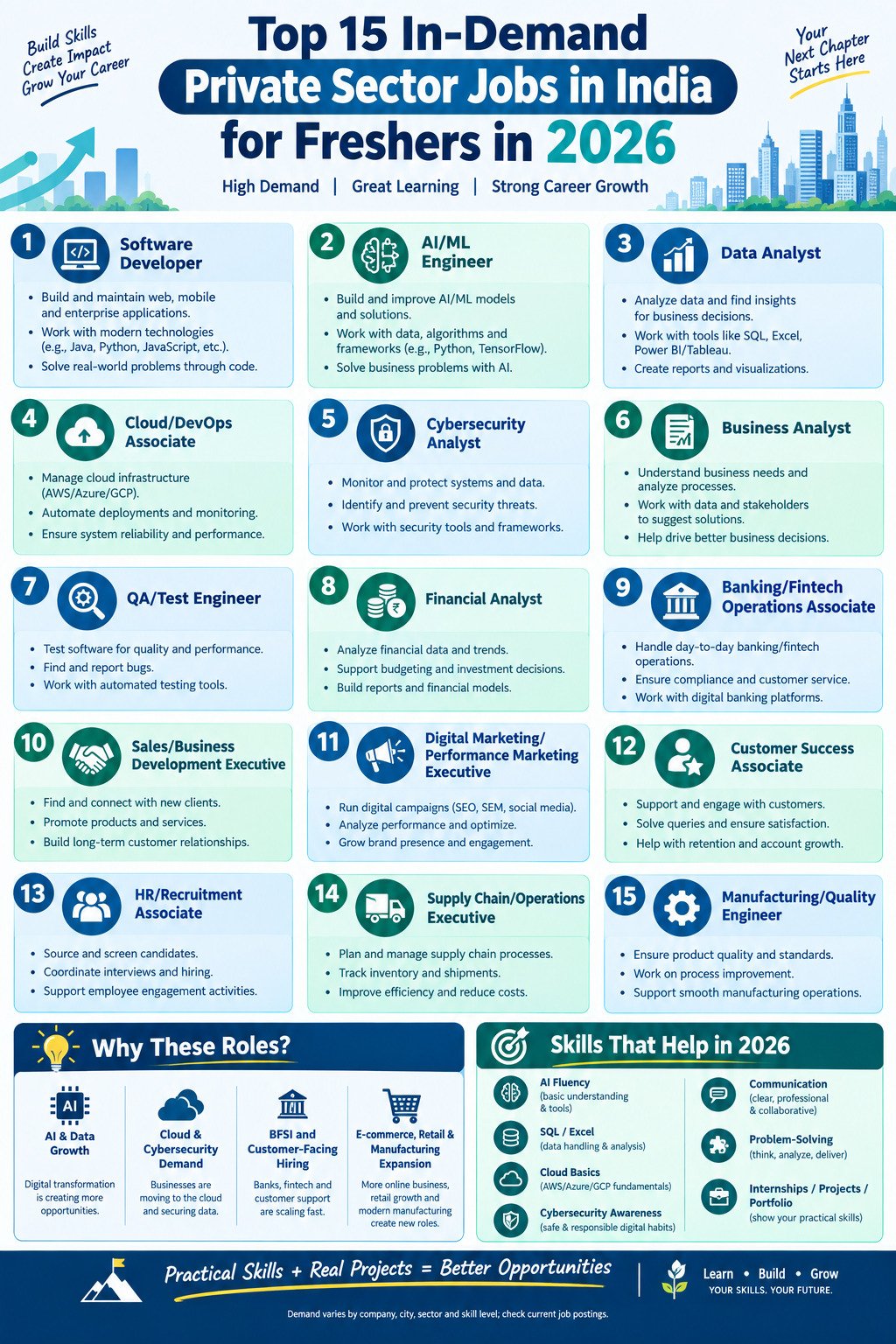
“Which job should I apply for as a fresher?” is one of the hardest questions to answer honestly, because most lists online are either outdated, overly generic (“become a data scientist!”), or written without acknowledging how competitive some of these roles actually are for someone with zero experience. This list focuses on roles that are genuinely hiring freshers in meaningful numbers in India right now, across different educational backgrounds and skill levels — not just the most talked-about tech jobs.
1. Business Development Executive / Associate
Almost every industry — SaaS, FMCG, real estate, finance — hires freshers into business development and sales roles, since these positions prioritize communication skills and willingness to learn over specific technical degrees. Entry-level salaries typically range from ₹2.5–5 LPA, often with performance-linked incentives that can meaningfully increase total compensation for strong performers.
2. Customer Support / Service Associate
Companies across IT, e-commerce, fintech, and BPO sectors consistently hire freshers for customer support roles, particularly those handling voice, chat, or email-based support. This is often an accessible entry point regardless of specific degree, with salaries generally in the ₹2–4.5 LPA range, and many companies offer internal growth paths into team lead or quality analyst roles within a couple of years.
3. Junior Software Developer / Trainee Engineer
IT services companies and startups continue hiring computer science and engineering graduates into junior developer roles, though competition has intensified and companies increasingly expect at least some practical project experience or relevant certifications beyond just a degree. Entry salaries vary widely — from around ₹3.5 LPA at service-based companies to significantly higher at well-funded startups and product companies, depending on skill demonstration during interviews.
4. Digital Marketing Executive
As businesses continue shifting marketing budgets toward digital channels, entry-level digital marketing roles — covering social media management, basic SEO, content coordination, and paid ad campaign assistance — remain consistently available. Salaries typically start around ₹2.5–4.5 LPA, and candidates who build a demonstrable portfolio (even through personal projects or internships) tend to stand out significantly in this space.
5. Data Entry / Junior Data Analyst
Companies across sectors need people to manage, clean, and perform basic analysis on data, and this has become an increasingly structured entry point, especially for candidates comfortable with Excel and basic tools like SQL or Power BI. Junior data analyst roles (distinct from pure data entry) offer somewhat better starting salaries, often ₹3–5 LPA, particularly for candidates who’ve built basic analytical skills through short courses or certifications.
6. HR Executive / Talent Acquisition Associate
Human resources remains a steady hiring area for freshers, particularly in recruitment support and HR operations roles, which don’t always require a specialized HR degree. Salaries generally range from ₹2.5–4.5 LPA, and this path offers reasonably clear growth into specialized HR functions (recruitment, compensation & benefits, HR business partnering) over a few years of experience.
7. Content Writer / Junior Copywriter
Digital content demand across websites, marketing campaigns, and social media has created consistent hiring for entry-level content roles. This particularly suits candidates from humanities, mass communication, or journalism backgrounds, though strong writers from any background can compete here with a solid writing portfolio. Salaries typically start around ₹2.5–4 LPA, with meaningful growth potential for writers who develop SEO knowledge alongside pure writing skill.
8. Graphic Designer (Junior/Trainee)
Design roles remain in steady demand across marketing agencies, e-commerce companies, and in-house brand teams. A strong portfolio matters considerably more than formal design education for many employers in this space, making it accessible to self-taught designers who’ve built genuine skill. Entry salaries generally range from ₹2.5–4.5 LPA, varying based on software proficiency (particularly Adobe Creative Suite) and portfolio quality.
9. Accounts Executive / Junior Accountant
Commerce graduates continue finding steady entry-level opportunities in accounts and finance support roles across companies of all sizes, particularly those with basic proficiency in Tally, Excel, and fundamental accounting principles. Salaries typically fall in the ₹2.5–4.5 LPA range, with reasonably clear progression toward more specialized finance roles as experience and additional qualifications (like pursuing CA/CMA alongside work) develop.
10. Operations Executive
E-commerce, logistics, and manufacturing companies consistently need operations executives to manage day-to-day process coordination, vendor communication, and basic operational reporting. This role suits candidates from varied academic backgrounds who demonstrate strong organizational and problem-solving ability. Entry salaries typically range from ₹2.5–4.5 LPA.
11. Junior QA / Software Tester
As software development continues expanding, quality assurance and testing roles offer a somewhat less crowded entry point compared to development roles, particularly for candidates willing to learn manual and basic automated testing concepts. Salaries generally start around ₹3–4.5 LPA, with this path offering solid technical growth for candidates who eventually specialize in automation testing.
12. Junior Financial Analyst
Finance and banking-adjacent companies hire freshers, particularly commerce and finance graduates, into junior analyst roles supporting reporting, basic financial modeling, and data compilation. Starting salaries can range from ₹3–6 LPA depending on the specific employer and city, with strong Excel and basic financial concept knowledge significantly improving candidacy.
13. Junior UI/UX Designer
As companies increasingly invest in product design, entry-level UI/UX roles have grown, particularly for candidates who’ve built a portfolio through personal projects, bootcamps, or design courses, even without a formal design degree. Salaries vary considerably based on portfolio strength and company type, typically ranging from ₹3.5–6 LPA at product-focused companies.
14. Retail / Store Management Trainee
Organized retail chains and FMCG companies run structured management trainee programs for freshers, combining floor-level operational experience with a defined path toward store or area management roles. Starting salaries typically range from ₹2.5–4.5 LPA, with reasonably transparent promotional timelines in many established retail chains.
15. Junior Recruiter / Staffing Consultant
Staffing and recruitment agencies consistently hire freshers into junior recruiter roles, which build strong communication, negotiation, and people-assessment skills useful across many future career directions, even if the candidate doesn’t stay in recruitment long-term. Salaries typically start around ₹2.5–4 LPA, often supplemented by incentive structures tied to successful placements.
How to Actually Improve Your Chances in Any of These Roles
Across nearly all these roles, a few practical patterns consistently improve fresher candidacy: a relevant short-term certification or course (even a few weeks long) demonstrating initiative beyond your degree, any internship experience — even unpaid or short-term — that shows you’ve applied skills in a real work context, and a portfolio or work sample where applicable (writing samples, design work, small coding projects, or data analysis exercises), since employers increasingly want evidence over claims on a resume.
Tailoring your resume specifically to each role’s requirements, rather than sending one generic resume to every application, also meaningfully improves shortlisting rates — recruiters and applicant tracking systems both respond better to resumes that clearly reflect the specific role’s keywords and requirements.
A Realistic Note on Salary Expectations
The salary ranges mentioned above reflect typical entry-level figures across many companies in India as of current market conditions, but actual figures vary significantly by city (metro cities generally pay more than tier-2/3 cities), company size and funding stage, and specific industry demand at the time of hiring. Treat these as directional ranges for planning purposes, not fixed promises, and always research current openings and reported salaries for your specific target companies and location before setting firm expectations.
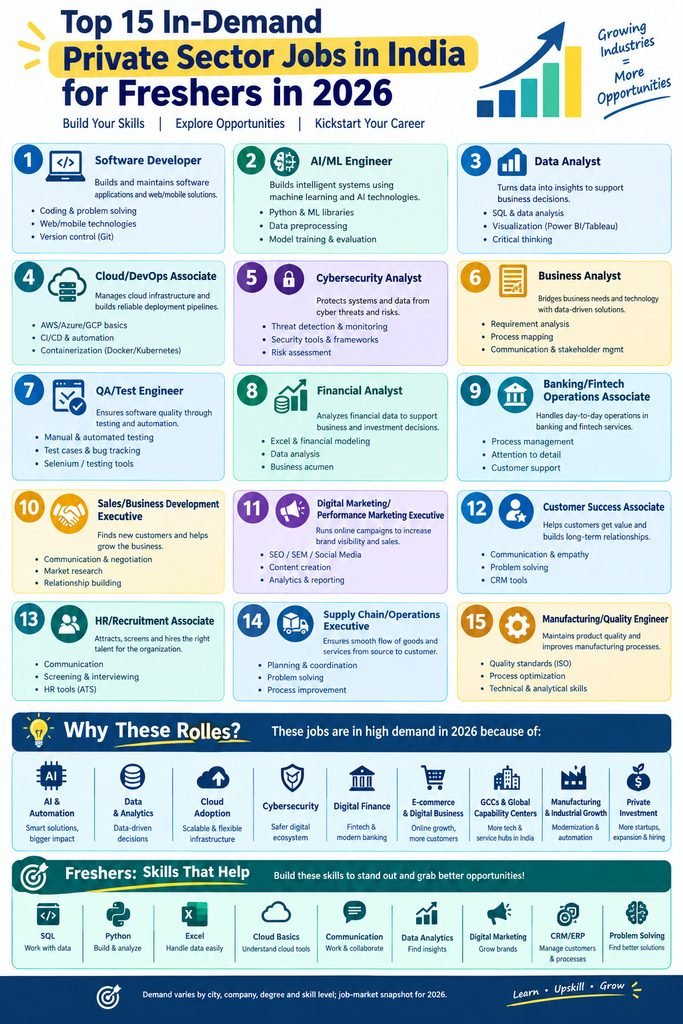
Frequently Asked Questions
Q1. Do I need a specific degree for most of these roles? Many of these roles (business development, customer support, content writing, digital marketing, HR) are accessible across degree backgrounds, prioritizing relevant skills and communication ability over a specific educational stream. Technical roles like software development and data analysis generally benefit from relevant technical education or certification, though this is becoming less strictly required as skill-based hiring grows.
Q2. Which of these roles offers the fastest salary growth? This varies considerably by individual performance and company, but sales/business development roles with incentive structures, and technical roles like software development and data analysis, generally show faster compensation growth for strong performers compared to some operational or support roles — though this isn’t a universal rule.
Q3. Should I prioritize salary or learning opportunity in my first job? For most freshers, prioritizing genuine skill development and mentorship in your first role tends to pay off more in the medium term than chasing the highest immediate salary, since strong early-career learning compounds into better opportunities and negotiating power later.
Q4. Are startups or established companies better for freshers? Both offer different advantages — startups often provide broader exposure and faster responsibility, while established companies typically offer more structured training and stability. The right choice depends on your personal risk tolerance and learning style rather than one being universally better.
Q5. How important are internships for getting hired into these roles? Quite important for most of these roles — internships, even short or unpaid ones, demonstrate practical exposure that meaningfully differentiates candidates in a competitive fresher job market, so pursuing at least one relevant internship during your final year of study is generally a worthwhile investment of time.
The Bottom Line
The private sector job market for freshers in India spans far more roles than the commonly discussed tech and consulting positions — from sales and operations to design and finance support, there are genuine, consistently available entry points across industries. Focus on building demonstrable skills and relevant experience alongside your degree, tailor your applications specifically to each role, and set realistic salary expectations based on your city and industry rather than outlier figures you might see circulating online.
For related reading, check out our guide on The Perfect Fresher Resume: A Section-by-Section Template That Actually Gets Shortlisted, or explore Which Skill Should You Learn in 2026 If You Want a Job in 6 Months?